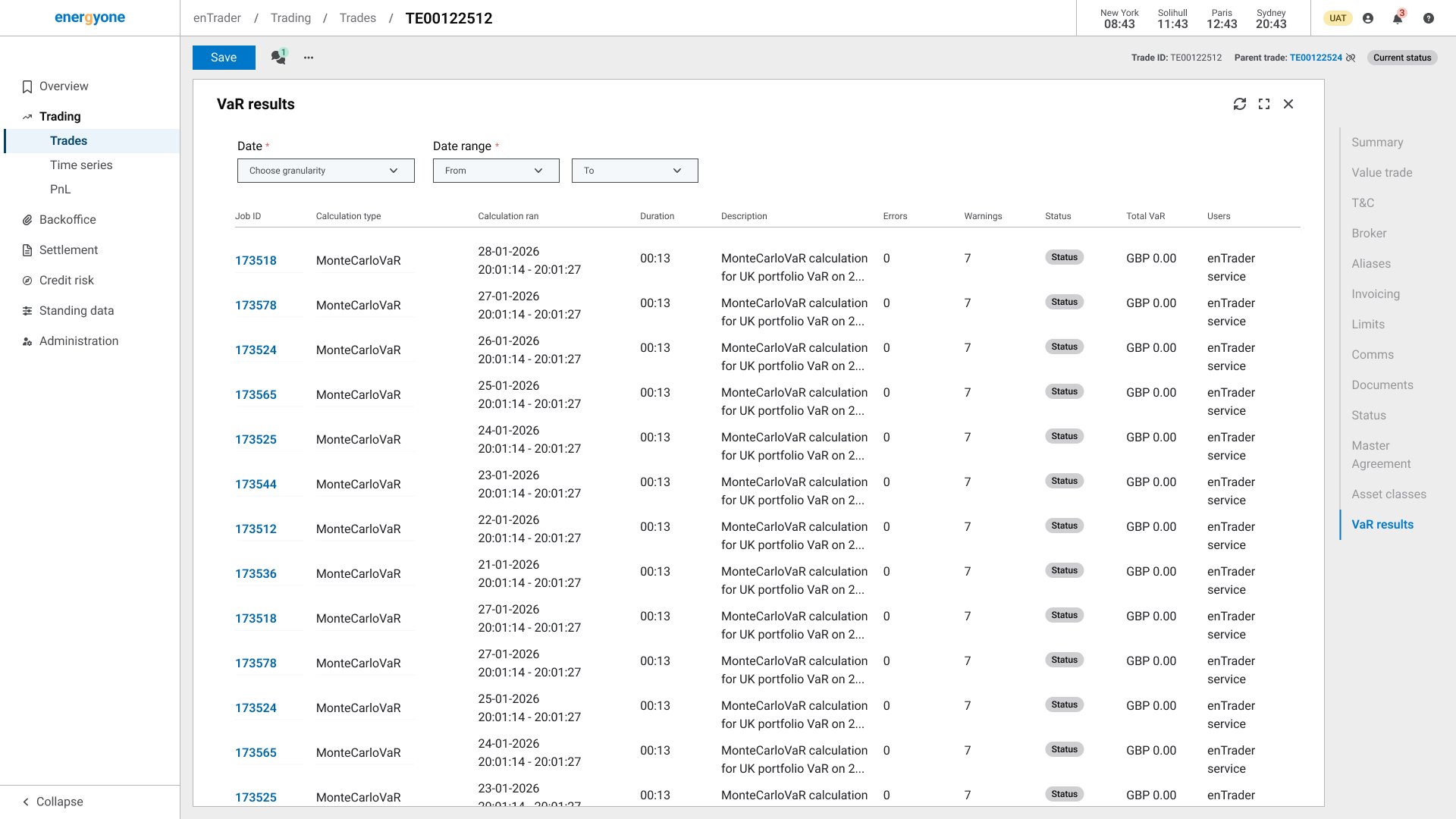
Data shown is fictional. Real client data and some screens are omitted due to NDA restrictions.
01 · Frame
Many platforms, one product
Energyone, an Australian publicly traded ETRM, expanded into Europe by acquiring trading platforms in Europe (eZ-energy, EGSSIS) and the UK (Contigo, GMSL).
The problem. Each deal added its own interface, and enTrader, the core platform, hadn't been redesigned in two decades.
The users. Front, middle and back office teams at around 50 enterprise clients.
The goal. Reduce enterprise churn, win usage back from the API and give sales a product that looks current.
Scope. enTrader first. enVoy, eZ-Ops and EGSSIS join the shell later.
The mandate. Reporting to the CTO, in 15-day sprints with product and engineering.
02 · Discover
Where the friction was
Most clients worked across two products. Many exported data through the API to build their own dashboards. Some lists took 30 seconds to load, and people used a small share of 76 pages.
What I first proposed. 14 interviews with clients, sales, customer success, support and in-house traders, plus 3 friction-mapping sessions.
03 · Define
One shell for every platform
The architecture. Microfrontends on one shared design system, so each platform joins the shell on its own timeline.
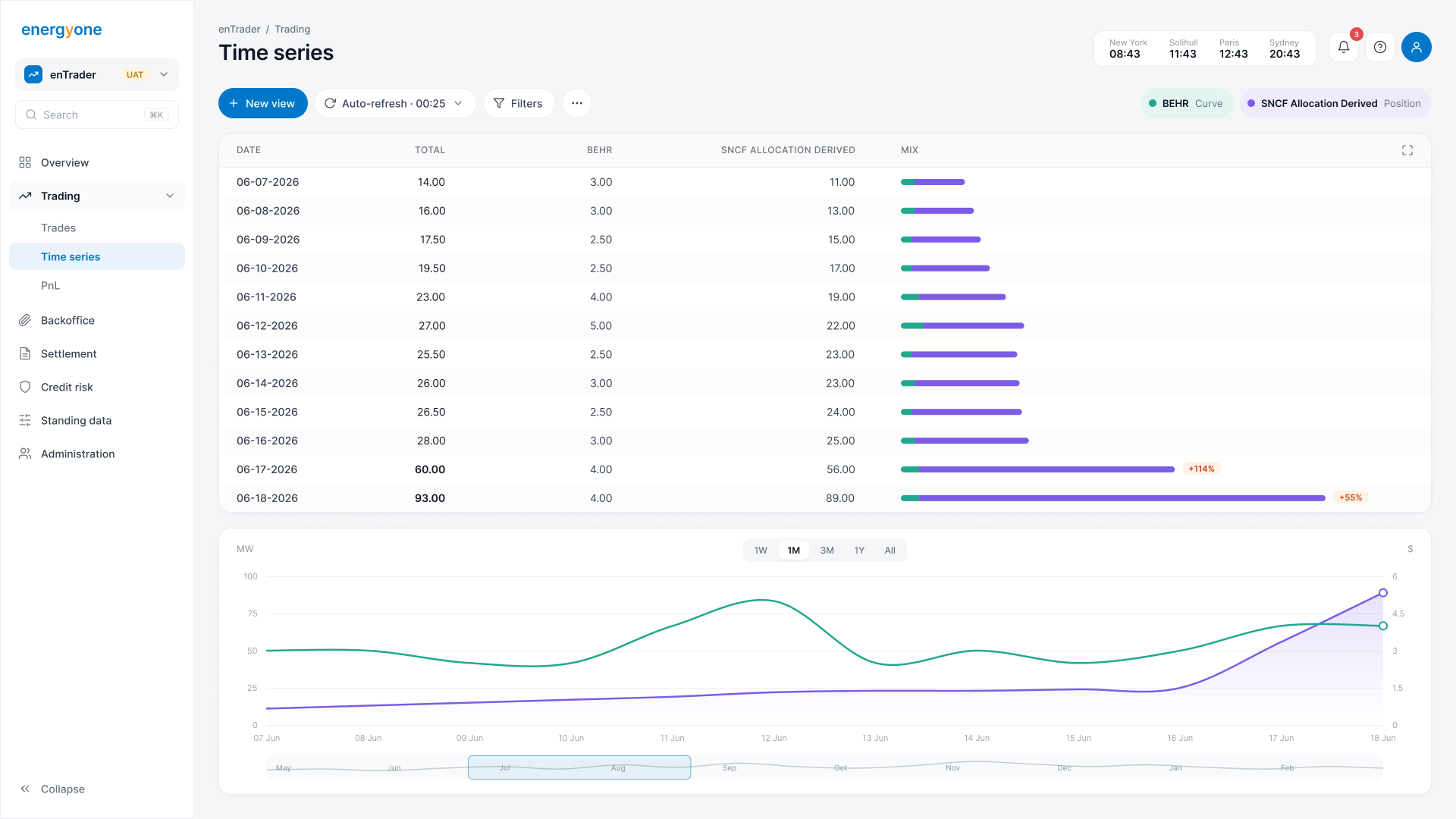
The navigation. 76 pages regrouped from 9 families into 6, across three levels: main, sub and tabs. Agreed with product and engineering.
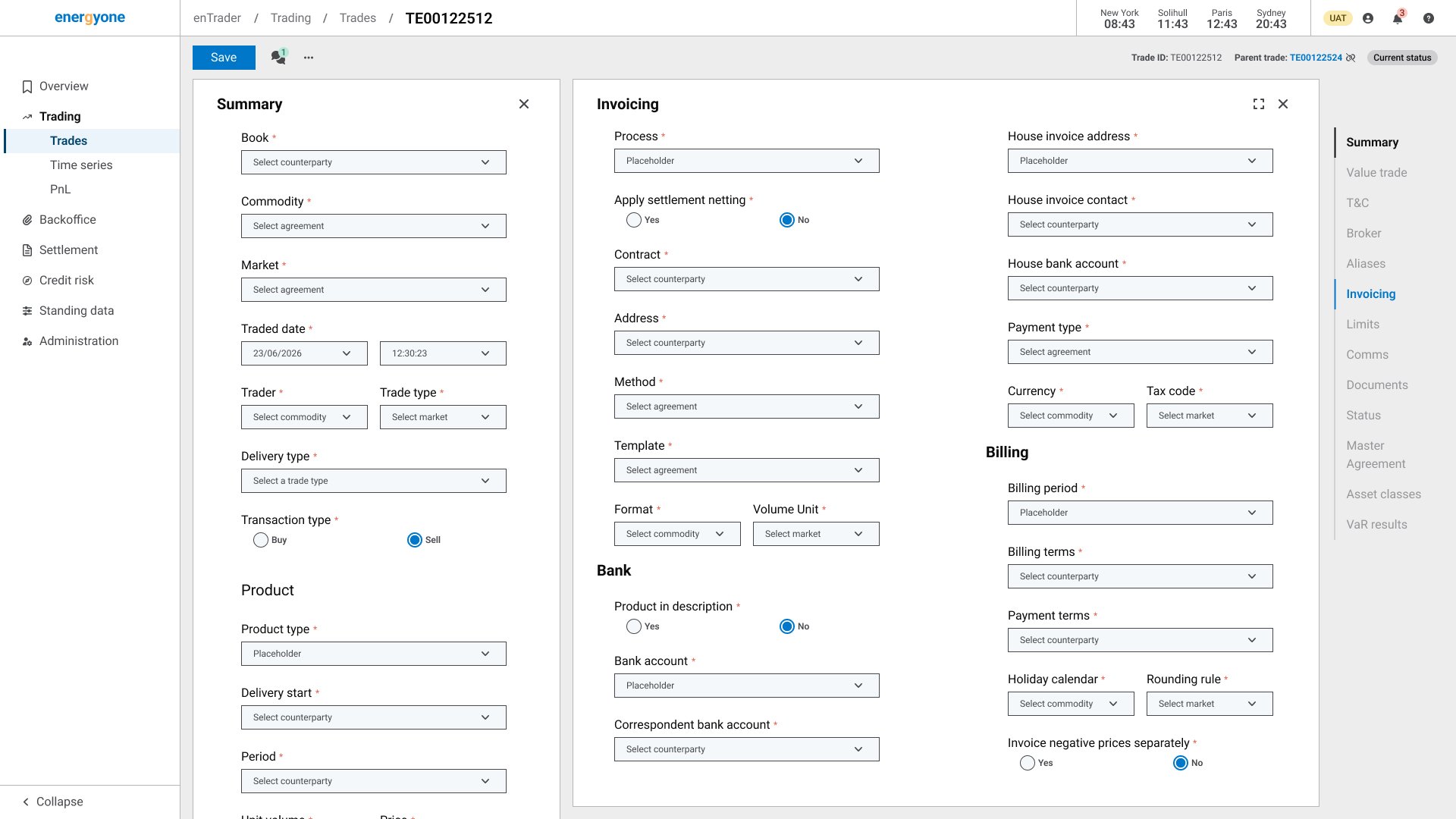
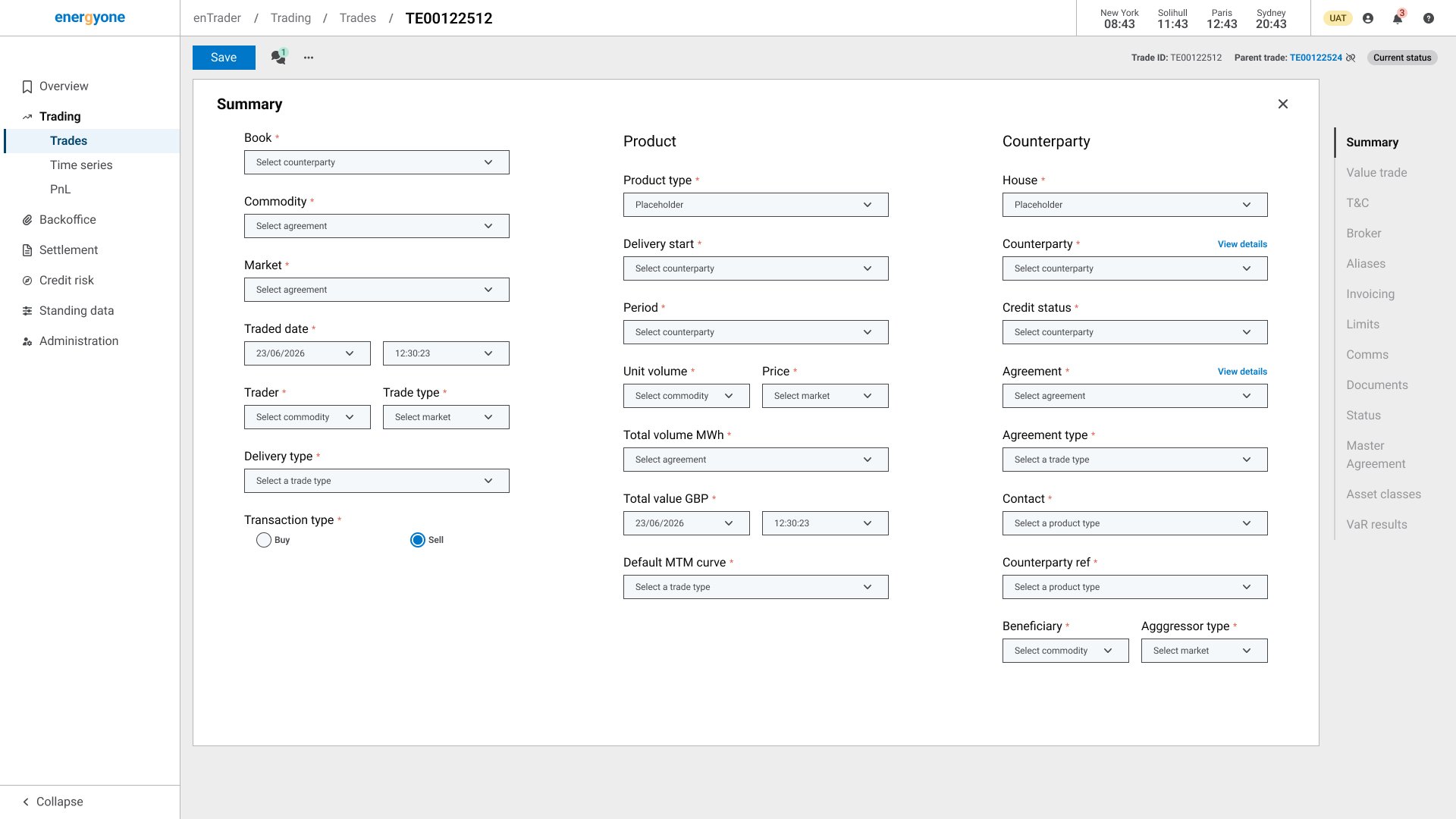
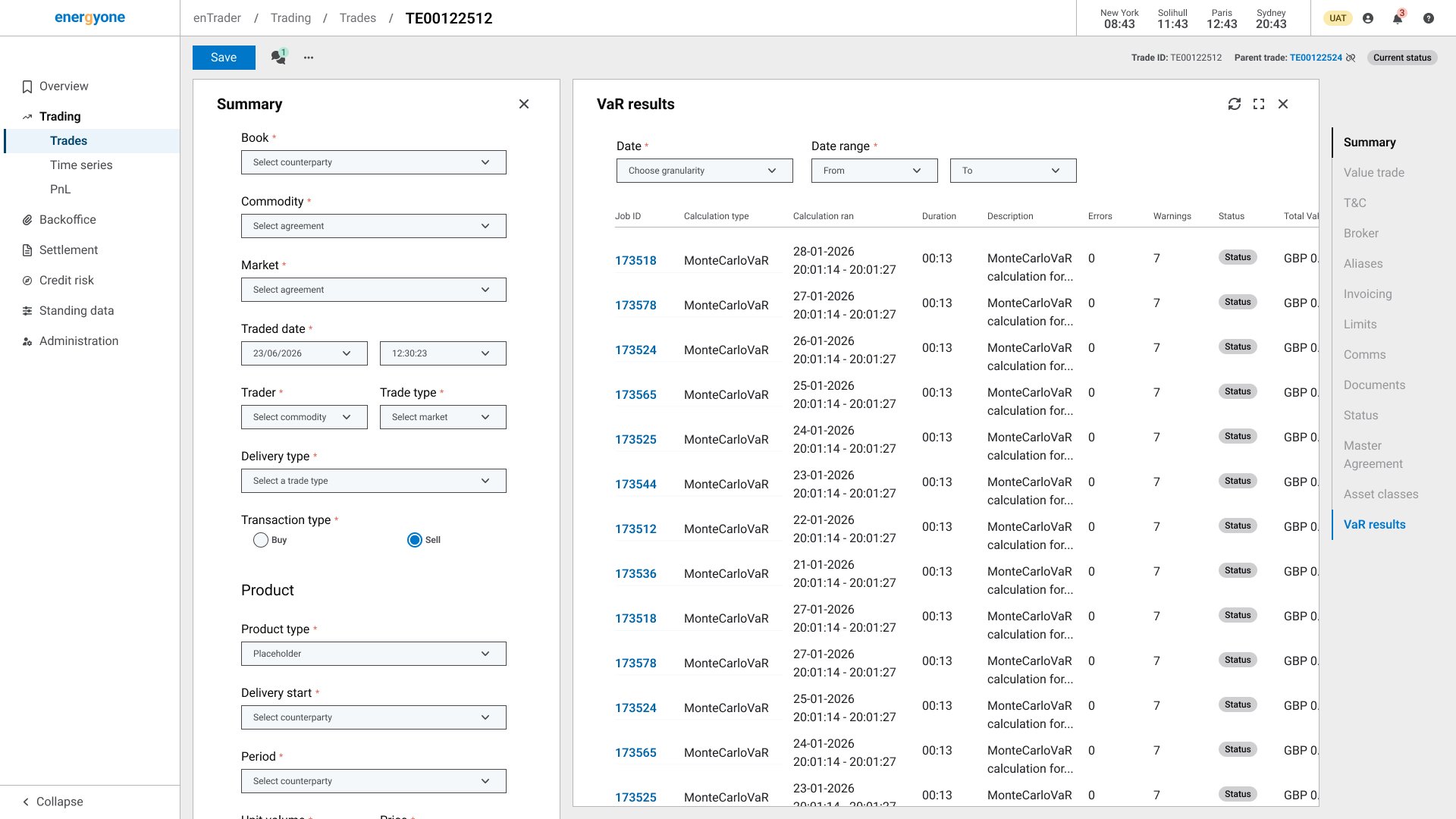
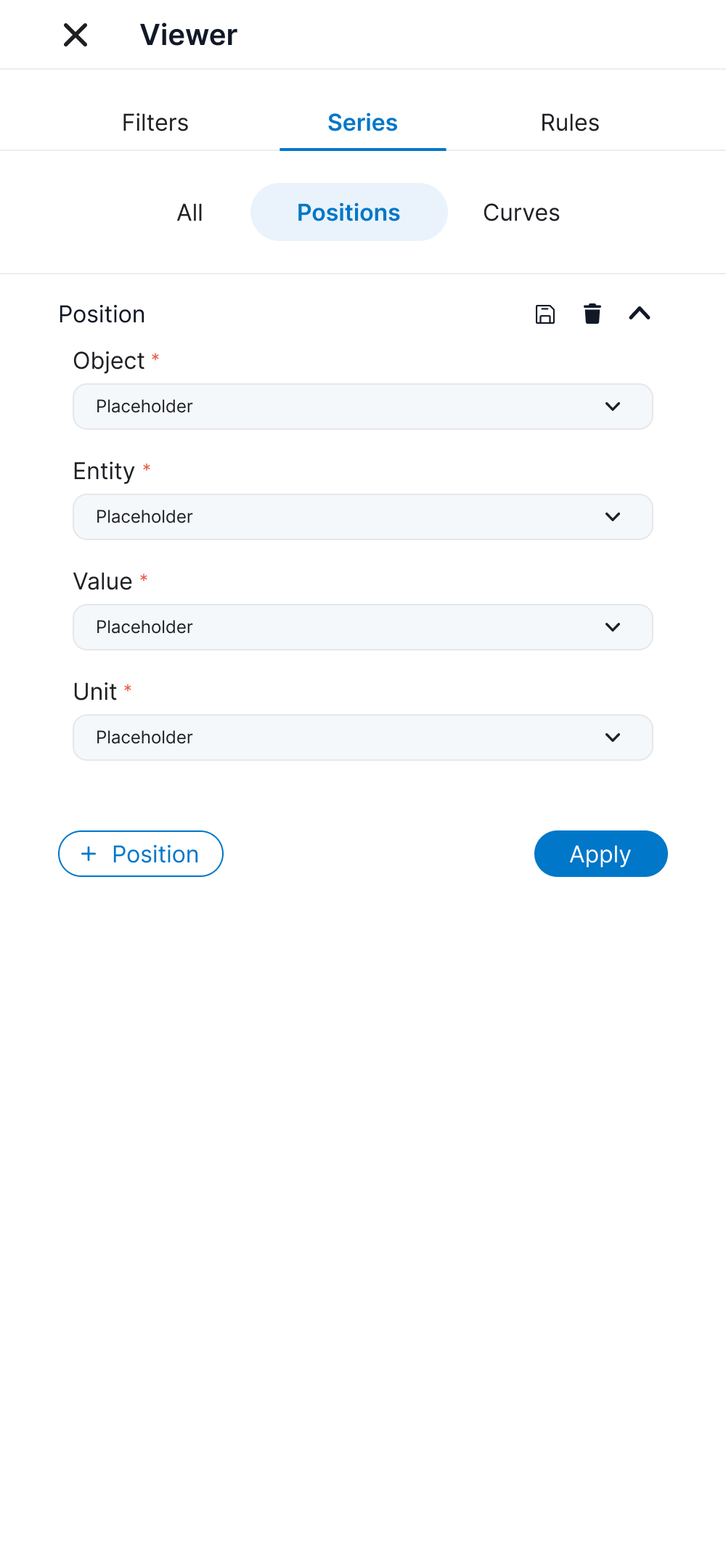
Priorities. The trade list, product detail and time series set the patterns for the rest.
- App rail. Switch between platforms without leaving the shell.
- Side nav. Main and sub levels of the active platform.
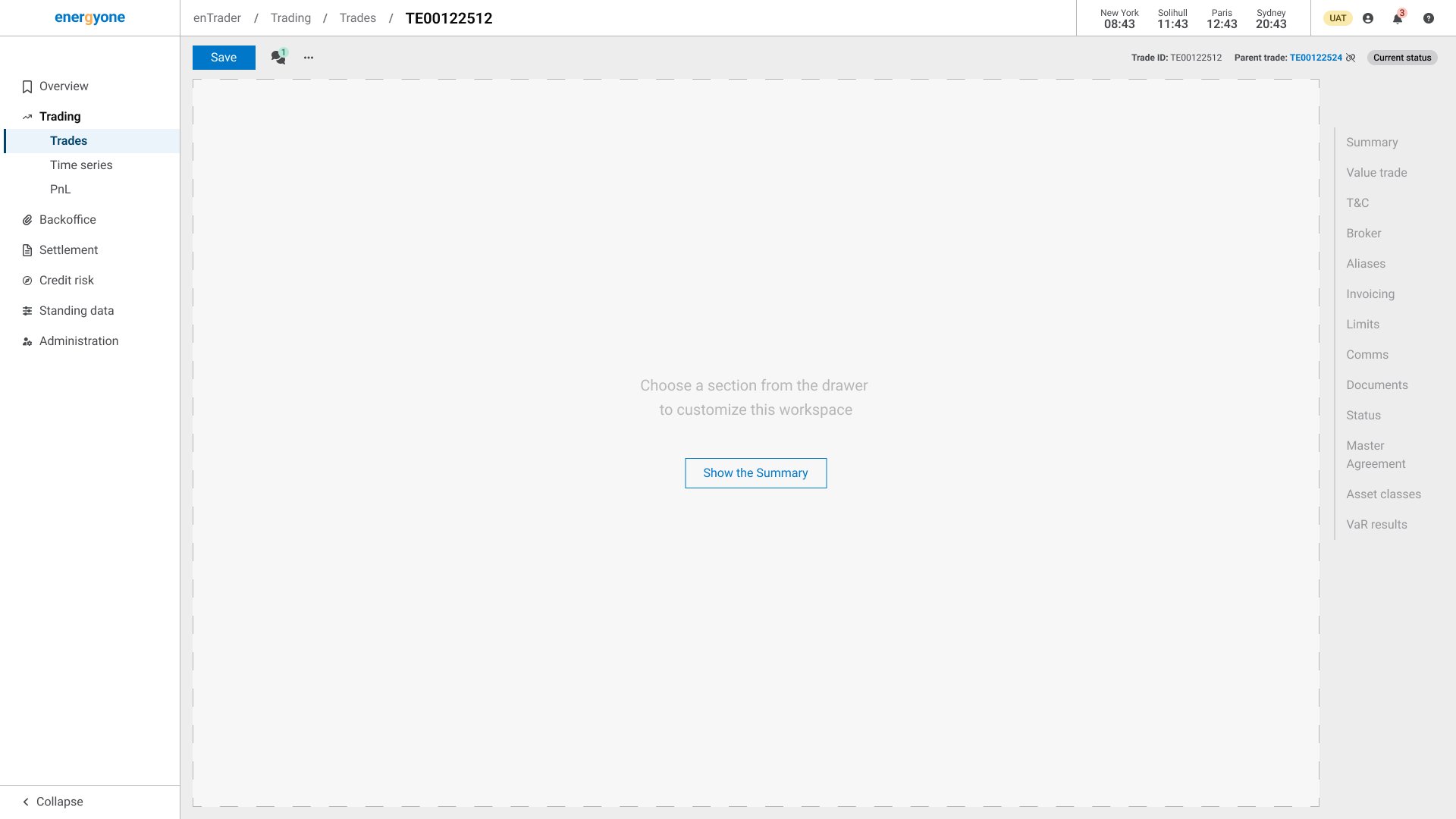
- Workspace. Tabs are the third level. The platform loads here.
Shared design system · Tailwind
04 · Prototype & validate
Validated sprint by sprint
Figma prototypes of the three reference screens, reviewed every sprint with product and engineering.
The visual call. A bold and a sober direction were both dropped, and so was the product manager's own proposal, built exactly as asked. A mix of the first two was approved the next sprint.
Interactions held from the first round. The validated result became the design system, shared through Tailwind.
Status: validated and handed to engineering, in staging.
Design system
Foundations · Components
Color
Primary #0077C8 · Secondary #F8981F
Typography
Aa
Roboto
Headings 700 · Body 500
- 60/72Heading 1
- 48/56Heading 2
- 40/48Heading 3
- 32/40Heading 4
- 24/28Heading 5
- 20/24Heading 6
- 16/24Body text
Spacing · Grid · Radius
12-column grid
Radius · None 0px → Pill 64px
Buttons
Primary
NewNewNewSecondary
Bulk actionsBulk actionsBulk actionsGhost
Bulk actionsBulk actionsBulk actionsForms
Commodity *View details
Market *
Book *
Alerts
05 · Deliver & measure
Shorter paths, then an AI pilot
The impact. Users told us they used around 10% of the navigation and built workarounds to dodge long table loads: API exports, Excel sheets and their own Power BI dashboards. Three levels put their everyday actions within reach and lighten the load for new users. Lazy loading, split tables and a floating drawer shorten the wait they feel.
The AI pilot. On the BASF custom build, a front-end developer, a PM, a QA and I built the three reference screens against the story points expected if built by hand.
What AI did. Turned the Figma design system into coded components and Storybook docs.
What I decided. Every interaction, reviewed with the front-end lead each sprint and backed by interview evidence.
How it was measured. Story points estimated upfront as if built without AI, validated by the Head of Technology.
20% fasterthan the control team, across pages, navigation and the Storybook design system.
06 · Systematize
A design system Claude Code can read
The connection. Figma linked to Claude Code through an MCP server, so the AI works from the real tokens and components, not screenshots.
The tokens. 100 color primitives and 37 semantic tokens in Foundations, exported to CSS.
The audit. All 23 components scanned in seconds. 32 of their 60 legacy color variables map to Foundations with no visible change.
The decision. Foundations is the single source of truth. Components move to it once the library is published.
/* Primitive */
--color-blue-500: #0077c8;
/* Semantic */
--brand-primary: var(--color-blue-500);
--brand-primary-hover: var(--color-blue-600);
--text-on-primary: var(--color-white);