Data shown is fictional. Real client data and some screens are omitted due to NDA restrictions.
Context
Compliance at legacy speed
QIMA's core compliance platform ran on outdated infrastructure that held back its B2B market expansion.
The problem. A fragmented legacy system bottlenecked scalability in a strict, data-intensive compliance environment.
The impact. In compliance, UI friction is a legal risk: a false positive or a permission error turns into enterprise churn and P&L leakage.
The mandate. Own the end-to-end modernization, turning the system into a commercial, white-label B2B SaaS.
The process. Agile, in 15-day sprints with product and engineering, so the architecture shipped in increments alongside the Angular migration.
01 · Deliverable
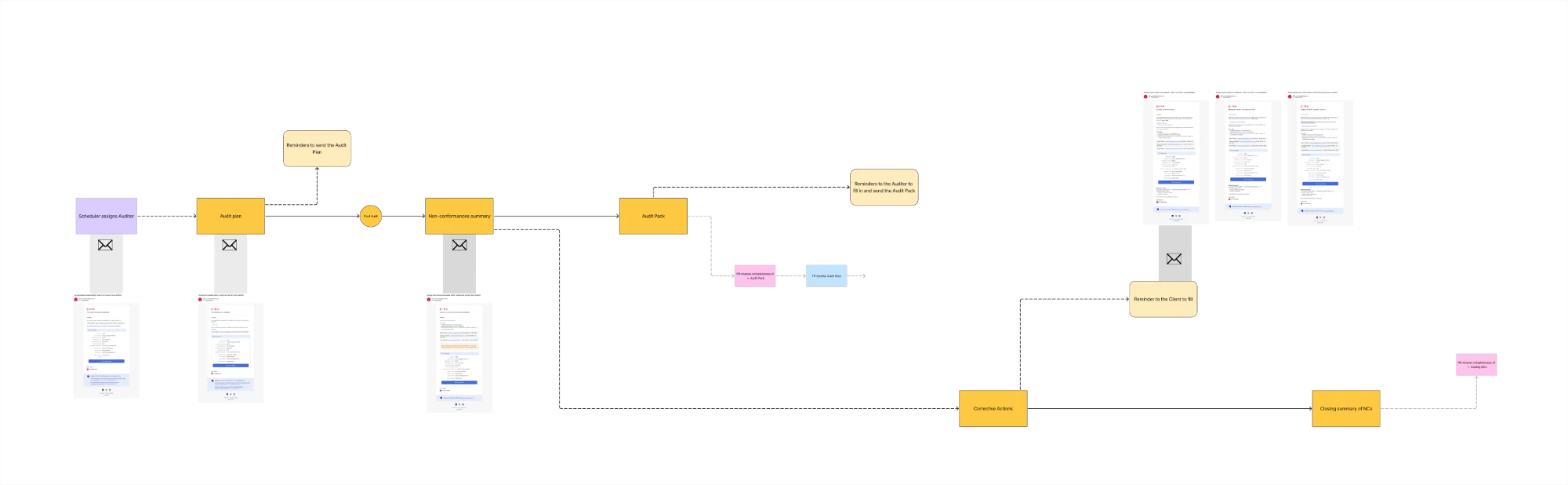
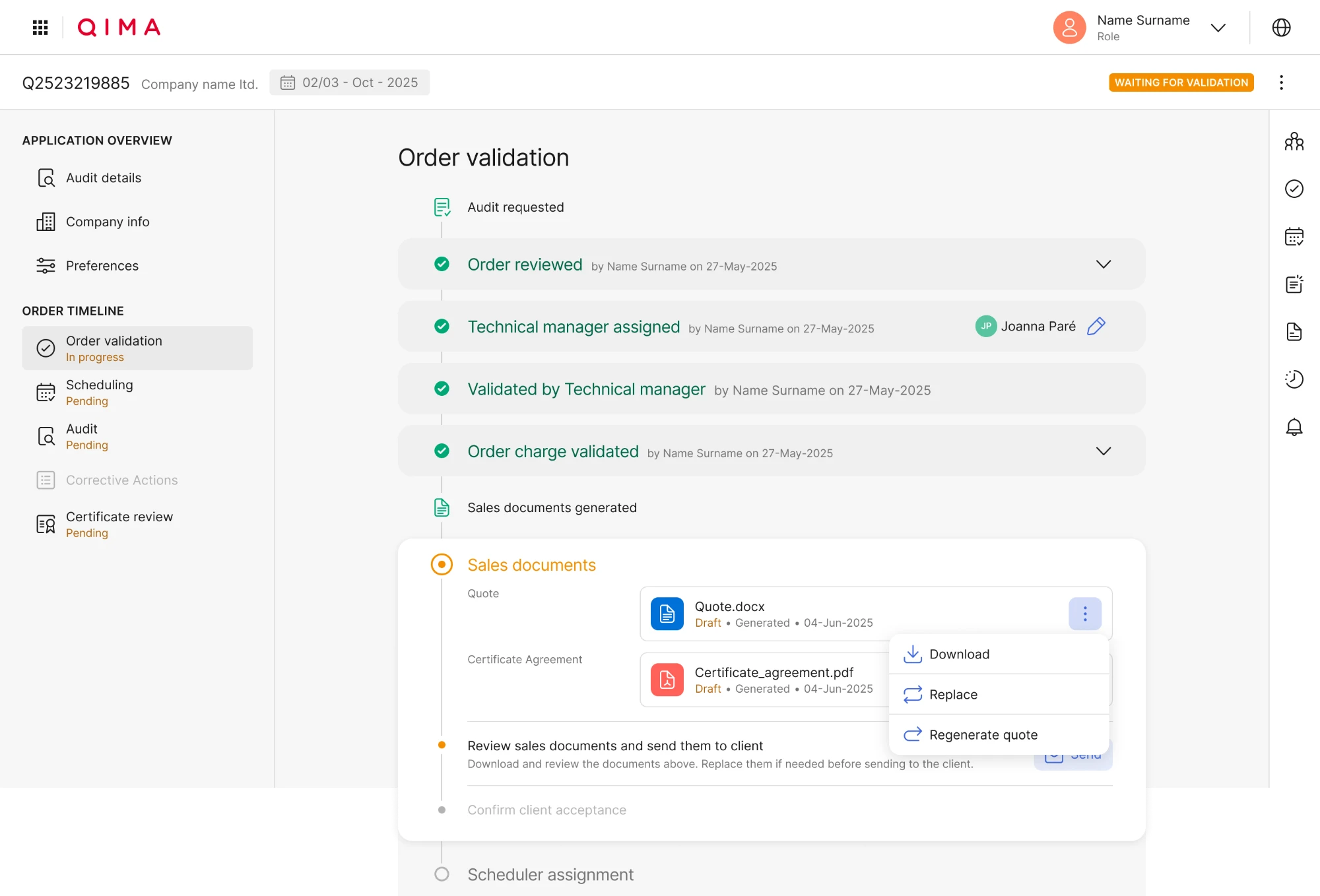
State-driven architecture
I defined complex asynchronous workflows and a granular role-based permission system (RBAC) built to handle heavy regulatory data loads.
Every inspection, lab test and audit moves through explicit states, so users always know where a record stands and what they are allowed to do with it.
02 · Deliverable
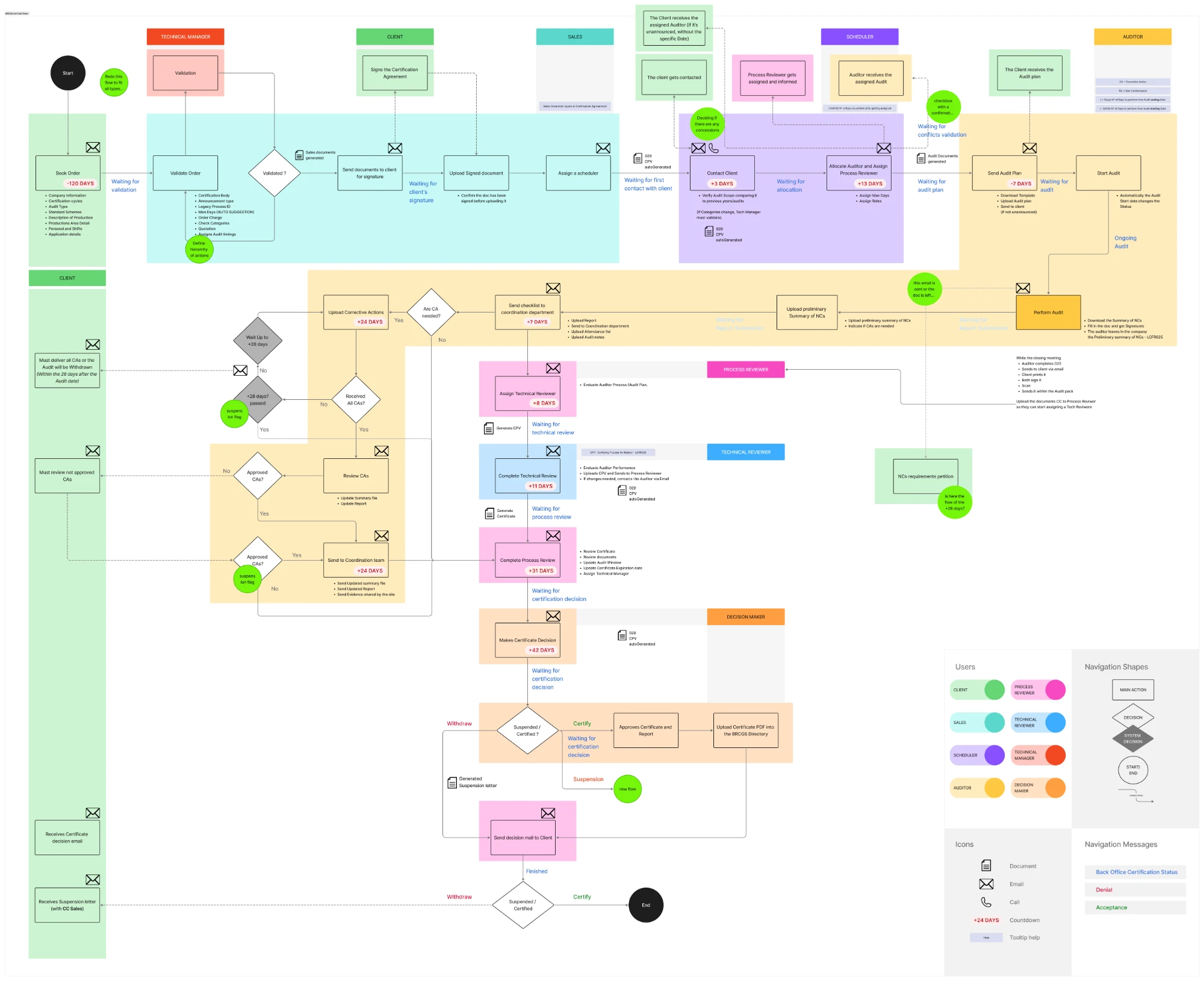
Design aligned with the Angular migration
The company had a hard technical need to move the whole stack to Angular.
I negotiated directly with engineering to map all UI logic against that migration, so design decisions fed the development pipeline instead of blocking it.
Result: no new technical debt, and engineering capacity protected.
03 · Deliverable
Error mitigation as a primary journey
I designed robust fallback states and asynchronous error handling for every critical flow.
Compliance edge cases were treated as primary user journeys, not afterthoughts, to prevent systemic failures.